आराम से पढ़ें
The Fascinating World Of The Red Panda And Its Unique Biology
The red panda is a small and captivating mammal. It lives in the eastern Himalayan mountains and parts of southwestern China. These animals feature dense reddish-brown fur. They have black bellies and dark legs. Their faces show white lines around their ears and a white muzzle. They possess a long tail with distinct rings. An adult typically measures between fifty and sixty centimeters in length. The tail adds another thirty to fifty centimeters to their size. They weigh anywhere from three to fifteen kilograms. Their bodies are perfectly adapted for climbing high trees. They have flexible joints and curved claws.
Turner Elena
रचनाकार
ओवन नोट
नीचे पूरी रचना पढ़ें।
संग्रह
बेकिंग पत्रिका
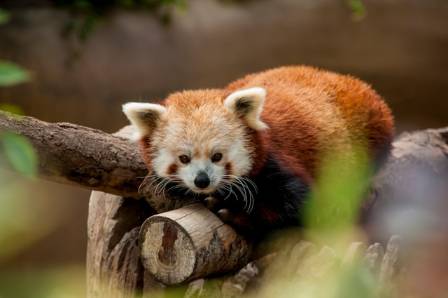
The red panda is a small and captivating mammal. It lives in the eastern Himalayan mountains and parts of southwestern China. These animals feature dense reddish-brown fur. They have black bellies and dark legs. Their faces show white lines around their ears and a white muzzle. They possess a long tail with distinct rings. An adult typically measures between fifty and sixty centimeters in length. The tail adds another thirty to fifty centimeters to their size. They weigh anywhere from three to fifteen kilograms. Their bodies are perfectly adapted for climbing high trees. They have flexible joints and curved claws.
Evolutionary History And Scientific Classification
Scientists formally described this species in eighteen twenty five. Two main types exist today. These are the Himalayan red panda and the Chinese red panda. Their genetic paths separated roughly two hundred and fifty thousand years ago. Experts debated their exact place on the evolutionary tree for a long time. Modern DNA evidence shows they share a close bond with raccoons. They also relate to weasels and skunks. They are not closely related to the giant panda. That animal is a true bear. Both species evolved elongated wrist bones. People call these false thumbs. Both animals use them to grasp bamboo stalks. The lineage of this family stretches back millions of years. Fossils found across Eurasia and North America prove their ancient presence.
Forest Life And Ecological Challenges
They live in cool, damp forests with lots of trees. They love steep slopes covered in thick bamboo. These animals are solitary and spend most of their time in branches. Bamboo shoots and leaves make up their primary diet. They also enjoy fruits and small blossoms. Mating season usually occurs during the early spring. Females give birth to small litters during the summer months. They face major threats from human activity today. Poaching remains a serious danger. Deforestation destroys their homes and splits their populations apart. The international community classifies them as an endangered species. They receive legal protection in all countries where they naturally occur.
Conservation Success And Cultural Popularity
Local communities in Nepal, Bhutan, and India lead active conservation programs. China also provides support through massive nature protection projects. Zoos across the world maintain successful breeding programs. These efforts help secure the future of the species. Red pandas appear frequently in modern media. They are stars in animated movies and popular video games. Their image inspires many brands and musical bands.
Why The Name Panda Remains A Mystery
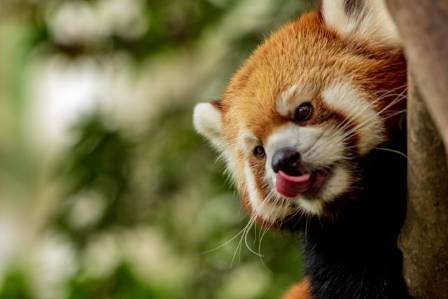
The origin of the word panda is not entirely certain. One popular theory links it to a Nepali word. That word refers to the ball of the foot or claws. Another translation suggests bamboo-footed. English speakers called this animal a panda for many decades. They adopted the prefix red or lesser later. This change helped distinguish them from the giant panda. That larger bear received its name much later in eighteen sixty nine. The scientific genus name comes from Ancient Greek. It simply means cat. The species name means shining or bright.
Complex Social Habits And Diet Needs
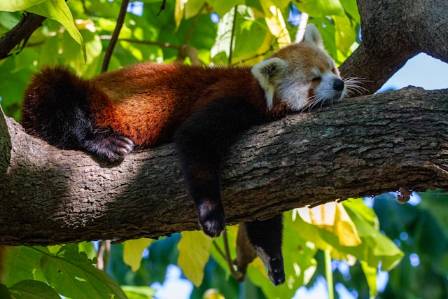
These animals are very shy and hard to spot in the wild. They are mostly active at dawn, dusk, and night. They sleep high in trees to stay safe. They move with great agility while climbing down trunks. They mark their home territory using scent glands. They use urine and waste to define their borders. Males mark their space more often than females. They prefer to eat specific types of mountain bamboo. Their digestive system is simple and not built for tough fiber. They must eat large amounts to gain enough energy. They spend many hours foraging each day. This diet requires a very high metabolism. They are surprisingly efficient compared to their larger bear-like cousins.
Motherhood And Raising The Cubs
The mother builds a cozy nest before giving birth. She uses sticks, leaves, and moss. She finds a hidden hollow in a tree or a rock crevice. A litter typically holds one to four tiny cubs. The babies arrive blind and completely helpless. They stay hidden in the nest for several months. The mother provides all the care and protection. Cubs grow very slowly. They reach adult size after about one year. They usually stay with their mother until the next breeding season starts. This long period ensures they learn how to survive in the wild.
इसके बाद यह पढ़ें

Lemon tea: why is it so good and how to make it at home?
Julian Ashford
पेंगुइन के बारे में 10 रोचक तथ्य
मधु

महिलाओं का सूट: एक परफेक्ट लुक पाने के लिए गाइड
गोपाल मालवीय

पृथ्वी पर 10 सबसे हरी-भरी जगहें - जंगल में सैर से लेकर झरने में डुबकी तक
अद्वैता

वुहान यांग्त्ज़ी ब्रिज
कीर्ति

दुनिया के 12 बेहतरीन बास्केटबॉल कोर्ट
ईशा