आराम से पढ़ें
Belted Kingfisher
If you spend time paddling along the rivers and lakes of New Hampshire during the summer, you may often hear the unmistakable rattling call of the Belted Kingfisher (Megaceryle alcyon). This unique bird is closely associated with freshwater environments and is best known for its impressive fishing skills.
Ivy Delacroix
रचनाकार
ओवन नोट
नीचे पूरी रचना पढ़ें।
संग्रह
बेकिंग पत्रिका
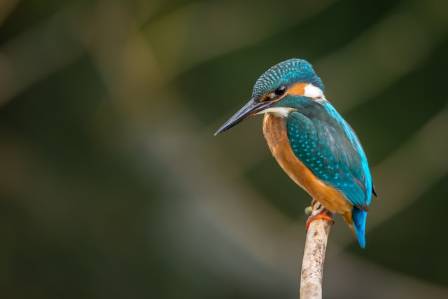
If you spend time paddling along the rivers and lakes of New Hampshire during the summer, you may often hear the unmistakable rattling call of the Belted Kingfisher (Megaceryle alcyon). This unique bird is closely associated with freshwater environments and is best known for its impressive fishing skills.
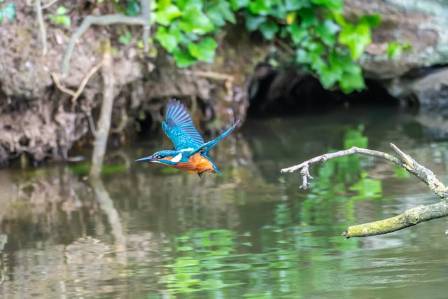
As its name suggests, the Belted Kingfisher’s diet consists mainly of fish. It usually hunts in shallow water, relying on its excellent eyesight to locate prey beneath the surface. These birds typically use two hunting strategies: waiting quietly from a perch or hovering above the water while searching for movement below.
Once a fish is spotted, the kingfisher plunges into the water, captures it with its strong bill, and returns to a nearby perch where it swallows the fish whole. Because they depend heavily on vision when hunting, Belted Kingfishers avoid areas with muddy water or rough waves that make it difficult to see underwater.
Nesting Habits of Belted Kingfishers
Belted Kingfishers are cavity-nesting birds, but unlike many species that use tree holes, they create their own nesting sites by digging tunnels into vertical banks made of sand or soil.
Their nesting burrows are usually about 4 to 6 feet deep and approximately 3 to 5 inches wide. The entrances can often be recognized by two small grooves along the bottom edge, created as the birds’ feet scrape the soil while entering and leaving the tunnel.
Historically, suitable nesting locations were mainly found along naturally eroding riverbanks, lake edges, and occasionally coastal cliffs. However, Belted Kingfishers have shown strong adaptability to human-altered environments. Today, they also build nests in gravel pits, road embankments, and other artificial landscapes, sometimes located a considerable distance from water.
Appearance and Unique Sexual Differences
Among New Hampshire’s bird species, Belted Kingfishers are unusual because females are more brightly colored than males.
Both sexes share several common features, including blue-gray feathers on the upper body, white underparts, a prominent double crest, and a blue-gray band across the chest.
The female, however, has an additional rusty-colored marking along the sides of the body. These reddish-brown feathers extend across the lower chest, creating a second band beneath the gray breast stripe.
Scientists are still uncertain why this species displays this unusual pattern, known as reverse sexual dimorphism, where females are more colorful than males. Similar characteristics are also found in related species, including the Ringed Kingfisher of southern Texas.
Population Decline and Conservation Concerns
Belted Kingfisher populations have experienced a gradual decline over several decades, although researchers have not identified a single clear cause.
One possible explanation involves exposure to environmental pollutants such as DDT and PCBs. These chemicals have negatively affected other fish-eating birds in the past, but studies of Belted Kingfishers have generally found low levels of these contaminants in tested populations.
Another historical threat was persecution at fish hatcheries, where kingfishers were sometimes viewed as competitors for fish. This practice has become much less common today.
A further concern involves changes to nesting habitat. Because Belted Kingfishers rely on naturally eroding soil banks for nesting, riverbank stabilization projects may reduce the availability of suitable nesting areas. Similar habitat losses have affected other bank-nesting birds, such as Bank Swallows.
The Need for Further Research
Although Belted Kingfishers are familiar and widespread birds, many aspects of their ecology and conservation needs remain poorly understood.
Studying how changes in waterways, nesting habitat, and environmental conditions affect these birds will be important for protecting their populations in the future. Continued research will help scientists better understand the challenges facing this distinctive fish-eating species and develop effective conservation strategies.
इसके बाद यह पढ़ें

Casual Shirts to Loafers: 10 Trendy & Comfortable Weekend Outfit Ideas for 2025
Michael

प्राचीन रेत की फुसफुसाहट: मिस्र के कालातीत पिरामिडों की यात्रा
विवेक

चेरी के 7 ज़बरदस्त हेल्थ बेनिफिट्स
माधवी

Destinations With The Bluest Waters
Ronan Pierce

प्लाज़ा डे एस्पाना
आदित्य

सिडनी हार्बर ब्रिज
वाणी