आराम से पढ़ें
Santorini: Behind the Beauty
The phrase “Greek Isles” often brings to mind images of bright white buildings lining hillsides, narrow streets glowing under the Mediterranean sun, and breathtaking views of deep blue seas stretching into the distance. However, with over 200 islands spread across the Aegean and Ionian Seas, choosing where to begin exploring can be a challenge.
Cassian Holloway
रचनाकार
ओवन नोट
नीचे पूरी रचना पढ़ें।
संग्रह
बेकिंग पत्रिका
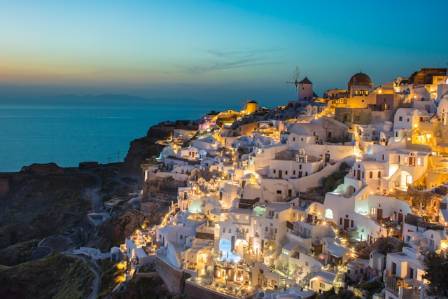
The phrase “Greek Isles” often brings to mind images of bright white buildings lining hillsides, narrow streets glowing under the Mediterranean sun, and breathtaking views of deep blue seas stretching into the distance. However, with over 200 islands spread across the Aegean and Ionian Seas, choosing where to begin exploring can be a challenge.
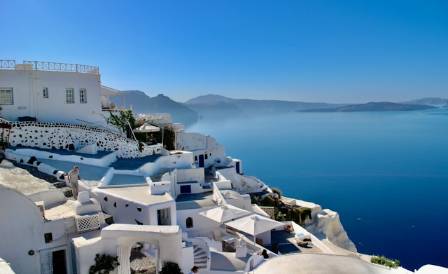
For many travelers, the first island that comes to mind is Santorini. Unlike its neighboring islands, Santorini was once a single landmass before a massive volcanic eruption thousands of years ago transformed it into a dramatic caldera. Today, its famous white villages sit along the steep edges of the volcanic cliffs, seemingly competing for the best views over the sea.
Beyond its postcard-perfect scenery, Santorini offers much more to discover, including charming vineyards, fascinating ancient ruins, and beaches shaped by its volcanic past.
Oia: The Iconic Village of Santorini
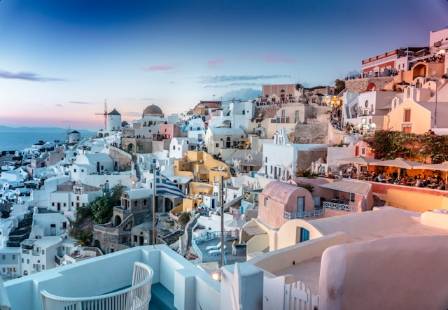
The village of Oia represents the classic beauty associated with the Greek islands. Pronounced “EE-ah,” this picturesque village features whitewashed homes, blue-domed churches, and winding pathways spread across a steep cliffside.
Oia’s viewpoints are among the most recognizable landscapes in Greece, attracting photographers from around the world who search for the perfect composition. The village has also inspired many artists, some of whom have chosen to make it their home. Couples on romantic getaways often stay in charming cliffside accommodations, enjoying breakfasts with unforgettable views.
At the quieter edge of the village, an old windmill reflects a simpler past, while cliffside bars create a romantic atmosphere where visitors gather each evening to watch the famous Santorini sunset.
Why Santorini Buildings Are White and Blue
In many images of Greek island villages, towns appear almost entirely painted in white. Although the color has become a symbol of Greek beauty, it originally served practical purposes. The white coating helped reflect the intense sunlight and reduce heat inside buildings.
The lime used in traditional whitewash also acted as a natural disinfectant. Local residents understood that it could help purify rainwater collected from rooftops. The combination of white walls and blue accents creates a striking appearance that many people associate with the colors of the Greek flag.
The Unique Cave Houses of Santorini
The earliest homes on Santorini were simple cave dwellings carved directly into the island’s cliffs. Because natural construction materials were limited, digging into the volcanic rock was an efficient solution.
These traditional cave homes were surrounded by layers of volcanic pumice, which provided excellent insulation. They remained pleasantly cool during hot summers and warmer during the winter months. Over time, these once modest homes became highly desirable properties, eventually transforming into luxury accommodations, restaurants, and vacation residences as tourism expanded.
Santorini’s Volcanic History
Long before travelers arrived on the island, Santorini was already an important center of civilization. During the Bronze Age, when the Minoans represented the earliest known advanced society in the Aegean region, Santorini was one of the most significant settlements outside their homeland of Crete.
Around 1630 BC, one of the largest volcanic eruptions in recorded human history occurred. Known as the Minoan Eruption, it released approximately 24 cubic miles of volcanic material, making it several times larger than the famous 1883 Krakatoa eruption in present-day Indonesia.
This enormous explosion reshaped Santorini, creating the sunken volcanic crater and dramatic landscape that visitors experience today.
Exploring Ancient Akrotiri
Visitors can discover Santorini’s own version of Pompeii at Akrotiri, an ancient city preserved beneath volcanic ash after the massive eruption. Archaeologists continue to uncover this Bronze Age settlement, and more than 30 buildings are currently open for exploration within a carefully designed archaeological site.
Visitors can walk along elevated pathways through the remains of the prehistoric city, observing ancient streets, drainage systems, pottery, and other preserved features. Some of the most remarkable discoveries, including detailed frescoes, decorative objects, furniture, and painted ceramics, are displayed at the Museum of Prehistoric Thira in Fira, Santorini’s main town.
Santorini’s Distinctive Wine Tradition
The island’s volcanic soil, strong sunlight, and dry climate create ideal conditions for producing unique wines. For centuries, local growers have trained grapevines into low, circular shapes that protect the plants from powerful winds while allowing them to collect moisture from morning dew.
Santorini’s grapes produce wines known for their rich flavor and sweetness. Today, visitors can explore numerous wineries across the island, where they can sample local varieties while enjoying spectacular views of the surrounding landscape.
Beaches Shaped by Volcanic Landscapes
Santorini’s beaches are unlike those found on many other Greek islands because of the island’s volcanic origins. The unusual geology has created beaches with distinctive colors and dramatic surroundings.
Two black-sand beaches sit near the southeastern volcanic slopes, offering a unique coastal experience. Along the southern coastline near Akrotiri, visitors can find several striking volcanic beaches. White Beach is surrounded by pale cliffs and can only be reached by boat, while Red Beach gets its remarkable color from iron-rich volcanic minerals and requires a challenging walk around the cliffs to access.
Experiencing the Magic of Santorini
No matter where visitors travel on Santorini, spectacular views are always nearby. Whether exploring ancient ruins, discovering vineyards, relaxing on volcanic beaches, or simply sitting on a cliffside terrace overlooking the caldera, the island delivers the unforgettable scenery and atmosphere that many travelers dream of when imagining a Greek holiday.
Santorini’s combination of natural beauty, history, culture, and romance makes it one of the world’s most memorable island destinations.
इसके बाद यह पढ़ें
जापान में स्कीइंग के लिए आपकी आवश्यक मार्गदर्शिका
अजय
Temple of Heaven: an Imperial Sacrificial Altar in Beijing
Cecilia Hartwell

Ten Extraordinary Automobiles That Perfectly Captured the Spirit of Their Eras
Clara Morgan

शीर्ष 10 खेत जानवर
ल्यूक यंग

दुनिया की 10 सबसे बेहतरीन केबल कार राइड
अभय
उत्तरी रोशनी देखने के लिए सबसे अच्छी जगहें कौन सी हैं
कीर्ति