आराम से पढ़ें
Understanding Mochi: A Comprehensive Guide
If you are curious about the chewy, versatile world of mochi, you have come to the right place. This guide explores what mochi actually is, its various forms, the cultural nuances between Japan and the West, and how you can prepare it in your own kitchen.
Alexander Whitcombe
रचनाकार
ओवन नोट
नीचे पूरी रचना पढ़ें।
संग्रह
बेकिंग पत्रिका
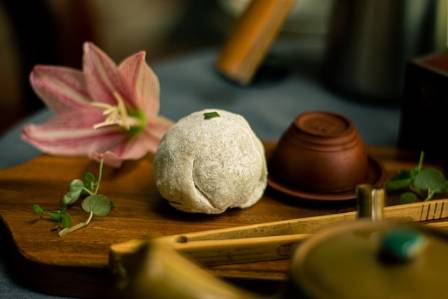
If you are curious about the chewy, versatile world of mochi, you have come to the right place. This guide explores what mochi actually is, its various forms, the cultural nuances between Japan and the West, and how you can prepare it in your own kitchen.
What Exactly is Mochi?
Mochi is a dense, elastic rice cake made from a single fundamental ingredient: "glutinous rice," known in Japan as mochikome. Despite the name, this rice is naturally gluten-free; the term "glutinous" refers to its sticky, glue-like consistency once cooked and pounded. While it is an icon of Japanese cuisine, similar rice cakes are found throughout various Asian cultures.
One of the most frequent misconceptions is that mochi is inherently sweet. In its purest form, mochi is quite bland, with only a very subtle sweetness derived from the natural starches in the rice. In Japan, plain mochi is often treated as a blank canvas, served with savory toppings like soy sauce or incorporated into hot soups. The perception of mochi as a sugary dessert is largely a Western phenomenon, likely driven by the popularity of mochi ice cream and the colorful treats often seen in media.
Regional Variations: Japan vs. the United States
There is a significant linguistic divide in how "mochi" is defined. In Japan, "mochi" refers strictly to the pounded rice cake. When that cake is stuffed with sweet fillings like red bean paste, it is called daifuku. When it is made from glutinous rice flour and sugar to create a soft, shelf-stable wrap, it is technically called gyuhi.
In the United States, particularly in Hawai’i and California, the terminology is much broader. Japanese-American communities often use "mochi" as a catch-all term for any chewy rice treat. For example, a strawberry-filled rice cake is often called "strawberry mochi" in America, whereas in Japan, it would exclusively be known as strawberry daifuku. This shift is likely due to the influence of local dialects, such as Hawaiian Pidgin, and the creative evolution of recipes within immigrant communities.
Common Varieties of Mochi Dishes
Mochi appears in a vast array of forms, spanning from traditional confections (wagashi) to modern fusion snacks.
-
Daifuku: Perhaps the most recognizable variety, consisting of soft mochi stuffed with fillings like sweet red bean paste (anko), white bean paste, or fresh fruit like strawberries.
-
Dango: Small, round dumplings often served on skewers. These are usually made from a blend of different rice flours and can be glazed with a sweet soy syrup (mitarashi) or tinted in seasonal colors.
-
Yakimochi: This literally means "grilled mochi." When heated, the rice cake puffs up and develops a crispy exterior and a gooey interior. It is often wrapped in seaweed with a dip of soy sauce.
-
Hawaiian Mochi: This has become a distinct culinary category. Butter Mochi is a local favorite that incorporates eggs, butter, and milk into a baked cake, while Chi Chi Dango is a soft, pillowy treat often made with coconut milk.
-
Fusion Desserts: Modern innovations have led to the rise of Mochi Donuts (noted for their "pon-de-ring" shape and bouncy texture) and Mochi Waffles, which use rice flour to create a gluten-free, chewy alternative to the classic breakfast item.
How Mochi is Traditionally and Modernly Prepared
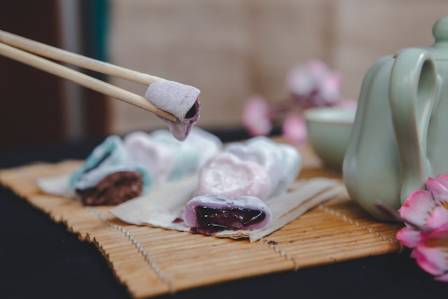
There are several ways to transform glutinous rice into the chewy texture we love, ranging from ancient labor-intensive methods to quick modern hacks.
The Traditional Pounding Method
Mochitsuki is the traditional ceremony of pounding steamed rice with a heavy wooden mallet (kine) in a large mortar (usu). It requires significant physical effort and rhythm between two people—one to swing the mallet and one to flip the rice. While rare in daily life, this is still a popular community event during New Year celebrations.
Electric Mochi Machines
For modern households, electric mochi makers have simplified the process. These machines steam and then "knead" the rice automatically, much like a bread maker, producing fresh mochi with minimal effort.
Working with Mochi Flour
Most home cooks today use glutinous rice flour (mochiko or shiratamako). By mixing the flour with water and sugar, you can cook the "dough" using three main methods:
-
Steaming: Generally considered the best method for retaining moisture and creating a supple texture.
-
Baking: Common for Hawaiian-style butter mochi, resulting in a firmer, cake-like structure.
-
Microwaving: The fastest and most convenient method, ideal for making quick batches of daifuku or gyuhi at home.
Mochi and Cultural Traditions
Mochi is deeply intertwined with the Japanese calendar and special celebrations. Ozoni, a savory soup containing mochi, is the quintessential New Year’s Day meal. In the spring, Sakuramochi (pink rice cakes wrapped in pickled cherry leaves) is enjoyed during blossom-viewing season. Other seasonal treats include Kashiwamochi for Children’s Day in May and Ohagi, a rustic rice ball coated in sweet bean paste, traditionally eaten during the autumn equinox.
Whether you enjoy it in a savory soup or as a sweet, fruit-filled snack, mochi offers a unique texture that continues to inspire chefs and home cooks globally.
इसके बाद यह पढ़ें

Choosing The Right Wall Clock For Your Home
Arthur Fay

What Sunrise Looks Like on the Moon
Vincent Hayes

दुनिया के 3 सबसे स्वप्निल मैकरॉन (हां, वे इतने अच्छे हैं)
प्रिया

जब समुद्र किनारे से मिलता है: दुनिया भर की 7 शानदार समुद्री चट्टानें
उत्कर्ष

Fresh Fruit Milkshake Tips
Rowan Pierce

नीला रेगिस्तानी आसमान
अवनी