आराम से पढ़ें
Fascinating Facts About Monkeys
Monkeys are highly diverse primates that mainly inhabit tropical forests around the world. Most species spend much of their lives in trees, although some, including macaques and baboons, are adapted to living on the ground. New World monkeys, such as spider monkeys, tamarins, and capuchins, are native to Central and South America as well as parts of Mexico, while Old World monkeys, including baboons, geladas, and colobus monkeys, are found throughout Africa and Asia. Many monkey species today face serious threats and are considered endangered due to habitat destruction and human activity.
Daphne Sinclair
रचनाकार
ओवन नोट
नीचे पूरी रचना पढ़ें।
संग्रह
बेकिंग पत्रिका
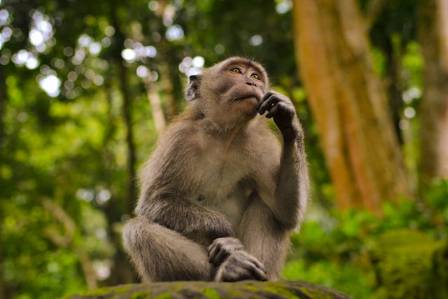
Monkeys are highly diverse primates that mainly inhabit tropical forests around the world. Most species spend much of their lives in trees, although some, including macaques and baboons, are adapted to living on the ground. New World monkeys, such as spider monkeys, tamarins, and capuchins, are native to Central and South America as well as parts of Mexico, while Old World monkeys, including baboons, geladas, and colobus monkeys, are found throughout Africa and Asia. Many monkey species today face serious threats and are considered endangered due to habitat destruction and human activity.
From powerful gripping tails to remarkable intelligence and advanced tool use, monkeys display many extraordinary adaptations. Here are some of the most interesting facts about these fascinating animals.
1. Not Every Primate Is a Monkey
Although people often use the word “monkey” to describe many primates, monkeys actually represent a distinct group within the primate family tree. They are separate from apes, such as chimpanzees, gorillas, and humans, as well as prosimians like lemurs, tarsiers, and lorises.
One of the clearest differences between monkeys and other primates is the presence of tails. Most monkeys have tails, while apes and many other primates do not. Apes are generally larger-bodied and have more developed brains, which contributes to their greater problem-solving abilities and intelligence.
2. Grooming Helps Monkeys Build Strong Social Bonds
For monkeys, grooming is much more than a way to remove dirt, parasites, or loose fur. It is an important social behavior that helps create trust, strengthen relationships, and maintain group harmony.
Research has shown that grooming can even provide physical benefits. When vervet monkeys groom each other, their fur becomes thicker and better arranged. After careful grooming, the insulating ability of their coats can increase significantly, helping them stay warm.
3. Only Some New World Monkeys Have Prehensile Tails
Among monkeys, only certain New World species possess fully prehensile tails that can function almost like an extra limb. These include spider monkeys, howler monkeys, and capuchins.
These monkeys live mainly in the tropical forests of Mexico, Central America, and South America. Old World monkeys from Africa and Asia also have tails, but their tails are not capable of gripping objects.
Spider monkeys and howler monkeys have especially impressive tails. Their tails are often longer than their bodies and have hairless gripping areas with friction pads that allow them to hold branches securely. Capuchin monkeys have shorter, furry tails that help them balance, grab branches, and carry food while moving through the forest.
4. Europe Has Only One Wild Monkey Species
The Barbary macaque is the only wild nonhuman primate found in Europe. Most populations live in the mountainous regions of Morocco and Algeria, but a small group also exists in Gibraltar.
Genetic studies suggest that the Gibraltar population was originally introduced from North Africa many centuries ago. Unfortunately, Barbary macaques are considered endangered throughout their natural range, and their numbers have declined significantly because of habitat loss and illegal wildlife trade.
5. Pygmy Marmosets Are the Smallest Monkeys in the World
The pygmy marmoset is the tiniest monkey species on Earth. Native to the Amazon Basin, this small New World monkey grows to only about 13 centimeters (5 inches) in body length and weighs roughly 113 grams (4 ounces) as an adult.
These miniature primates usually live in small family groups consisting of two to six individuals. Mated pairs work together to raise offspring, and females often give birth to twins.
Although pygmy marmosets are the smallest monkeys, the title of smallest living primate belongs to Madame Berthe’s mouse lemur.
6. Mandrills Are the Largest Monkey Species
Mandrills are the biggest monkeys in the world and are native to the tropical rainforests of central western Africa. They are famous for their colorful faces, bright markings, and striking appearance.
They also show strong differences between males and females. Female mandrills usually weigh around 25 pounds, while adult males average about 55 pounds and can occasionally reach nearly 120 pounds.
Their vivid facial colors become especially noticeable in adult males and play a role in social communication and attracting mates.
7. A Bald Uakari’s Face Color Can Indicate Health
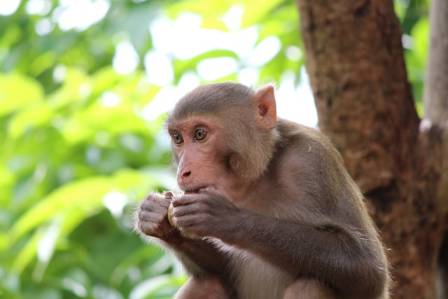
Bald uakaris are unusual New World monkeys known for their bright red faces. Scientists believe that facial color may provide information about an individual’s health.
Healthy bald uakaris often have stronger, brighter facial coloration, while sick individuals, especially those suffering from diseases such as malaria, may develop paler skin tones.
These monkeys also possess excellent color vision, which helps them recognize healthy potential mates and social partners.
8. Capuchin Monkeys Are Skilled Tool Users
Capuchin monkeys are among the most intelligent nonhuman primates when it comes to using tools. They were among the first monkeys observed using complex tools in the wild.
Archaeological evidence shows that wild bearded capuchins have used stone tools for thousands of years. One of their best-known behaviors is cracking open hard nuts by placing them on stone surfaces and striking them with another rock.
Over generations, capuchins have refined their techniques, selecting different sizes of stones depending on the type of food they are opening. They have also been observed crushing millipedes and rubbing them on their bodies, possibly as a natural insect repellent.
9. Howler Monkeys Produce the Loudest Calls
Howler monkeys are famous for having one of the loudest vocalizations among land animals. Their powerful calls can travel several miles through dense forests.
Male howler monkeys are usually larger and produce deeper, stronger sounds than females. Their impressive roars are made possible by a specialized adaptation: an enlarged hyoid bone in their throat that acts as a powerful sound chamber.
These loud calls help monkeys communicate, defend territory, and locate members of their group.
10. Japanese Macaques Relax in Hot Springs
Japanese macaques, also known as snow monkeys, are among the few primates adapted to survive in extremely cold environments. They live in regions ranging from subtropical areas to snowy mountain forests.
In Japan’s Jigokudani Monkey Park, groups of snow monkeys are famous for bathing in natural hot springs during winter. Scientists believe this behavior helps them cope with freezing temperatures and may also reduce stress.
11. Monkeys Carefully Select Their Sleeping Trees
Many monkeys spend the night high above the ground, so choosing a safe sleeping location is extremely important.
They often select tall, isolated trees with branches that do not connect easily to nearby trees. This strategy makes it more difficult for predators to reach them. Sleeping high in trees may also reduce exposure to insects, including mosquitoes that can transmit diseases.
Some monkey species choose locations near human settlements because these areas may provide easier access to food sources.
12. Rhesus Monkeys Have the Widest Distribution Among Nonhuman Primates
Rhesus macaques are naturally found throughout Asia, but their adaptability has allowed them to establish populations in many other parts of the world.
Introduced populations now exist in places such as Florida, South Carolina, and Puerto Rico. Their ability to survive in different environments, from tropical forests to cold mountainous regions, has made them one of the most widespread nonhuman primates on Earth.
13. Monkeys Do Not Mainly Eat Bananas
Although popular culture often shows monkeys eating bananas, their natural diets are much more varied.
Most monkeys are omnivores and consume a wide range of foods, including fruits, nuts, leaves, flowers, seeds, bark, roots, insects, birds, and small animals. Since bananas are agricultural crops, wild monkeys rarely encounter them in their natural habitats.
Many monkeys have never eaten a banana in the wild.
14. Many Monkey Species Are Facing Extinction
A large number of monkey species are declining rapidly because of human activities. The greatest threats include habitat destruction, forest fragmentation, illegal wildlife trade, hunting for meat, and use in traditional medicine.
Several monkey species are listed among the world’s most endangered primates. Critically threatened Old World monkeys include the Roloway monkey, Niger Delta red colobus, and Cat Ba langur, with some populations reduced to only a few dozen individuals.
Endangered New World monkeys include the cotton-headed tamarin, Ecuadorian white-fronted capuchin, and pied tamarin. Protecting forests and reducing human pressure are essential for ensuring these remarkable primates survive into the future.
इसके बाद यह पढ़ें

Classic French Fruit Tart
Benjamin Hayes

20 DIY समर डेकोरेटिंग आइडिया जो आपके स्पेस को ब्राइट और खूबसूरत बनाएंगे
संजय

2025 और 2026 के लिए सर्वश्रेष्ठ लक्ज़री स्पोर्ट्स कारें
रणवीर

सिल्क रोड के किनारे सबसे खूबसूरत झीलें और घास के मैदान
तनिष्क

नीला स्वास्थ्य: समुद्र द्वारा छुट्टी के भलाई के लाभ
राधा

5 कारण क्यों घड़ी एक जरूरी एक्सेसरी है
मंजू