← मुख्य पन्ना2 मिनट का पाठ
आराम से पढ़ें
Are Zebras Black with White Stripes or White with Black Stripes?
It may sound like a playful riddle, but the question of a zebra’s true coloration actually has a scientific answer: zebras are fundamentally black with white stripes. Though many people assume the opposite—largely because some zebras display white bellies and legs—it’s not as straightforward as it appears. The illusion of a white base is created by how their stripes are distributed, but the truth lies beneath the surface.
N
Noah Sinclair
रचनाकार
ओवन नोट
नीचे पूरी रचना पढ़ें।
संग्रह
बेकिंग पत्रिका
It may sound like a playful riddle, but the question of a zebra’s true coloration actually has a scientific answer: zebras are fundamentally black with white stripes.
Though many people assume the opposite—largely because some zebras display white bellies and legs—it’s not as straightforward as it appears. The illusion of a white base is created by how their stripes are distributed, but the truth lies beneath the surface.
The Science Behind the Stripes
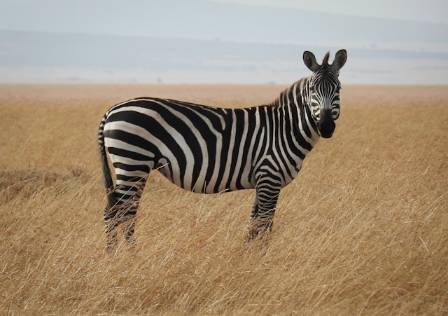
Each strand of zebra hair, regardless of color, grows from follicles containing melanocytes, the pigment-producing cells found in all mammals. These cells generate melanin, the compound responsible for dark pigmentation. In zebras, specialized signals guide where and when melanocytes express melanin, forming the distinct black-and-white striped pattern.
Critically, white fur lacks melanin entirely, meaning it's not the result of a white pigment but rather an absence of color. In contrast, black fur results from active pigment production. Because melanin is present only in the darker areas, scientists view black as the zebra’s default hair color, with white stripes being areas where pigmentation is suppressed.
Additionally, underneath their coats, zebras have dark skin. If you were to shave a zebra completely, the animal would appear nearly solid black—adding further weight to the idea that they’re black with white markings, not the other way around.
The Mystery of the Stripes
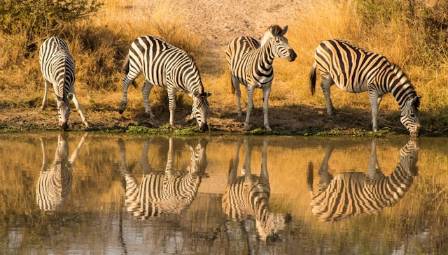
While the color question has been settled, scientists are still debating why zebras evolved stripes in the first place. Over the years, researchers have proposed a wide range of theories—more than a dozen, in fact—ranging from predator evasion to social signaling.
Among the leading explanations today are:
Deterrence of Biting Insects
One prominent hypothesis is that the contrasting stripes confuse biting flies, such as horseflies and tsetse flies. These insects are known to avoid striped patterns, possibly because the visual disruption makes it harder for them to land. Field experiments have shown that zebras, as well as horses dressed in striped coverings, attract fewer flies than their solid-colored counterparts.
Temperature Control
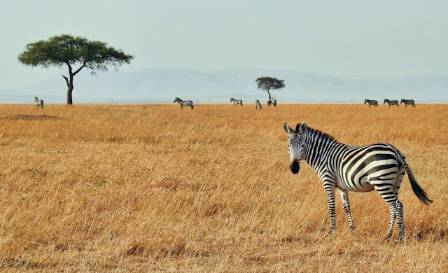
Another well-regarded theory suggests that stripes help zebras manage body temperature. The idea is that black areas absorb sunlight while white areas reflect it, potentially creating micro-air currents along the skin that help cool the animal. Supporters of this theory argue that avoiding overheating is a constant concern, whereas fly infestations are more seasonal or localized.
Despite these competing ideas, no single theory has yet emerged as conclusive. As researchers continue to investigate, we may one day understand the full purpose behind the zebra’s striking appearance.
For now, though, one thing is clear: zebras are black animals with white striping—a fact that reveals just how much more there is to nature than meets the eye.